October 29, 2025

Water Temperature Found to Drive Seasonal Shifts Between Dolphin Species in the Azores

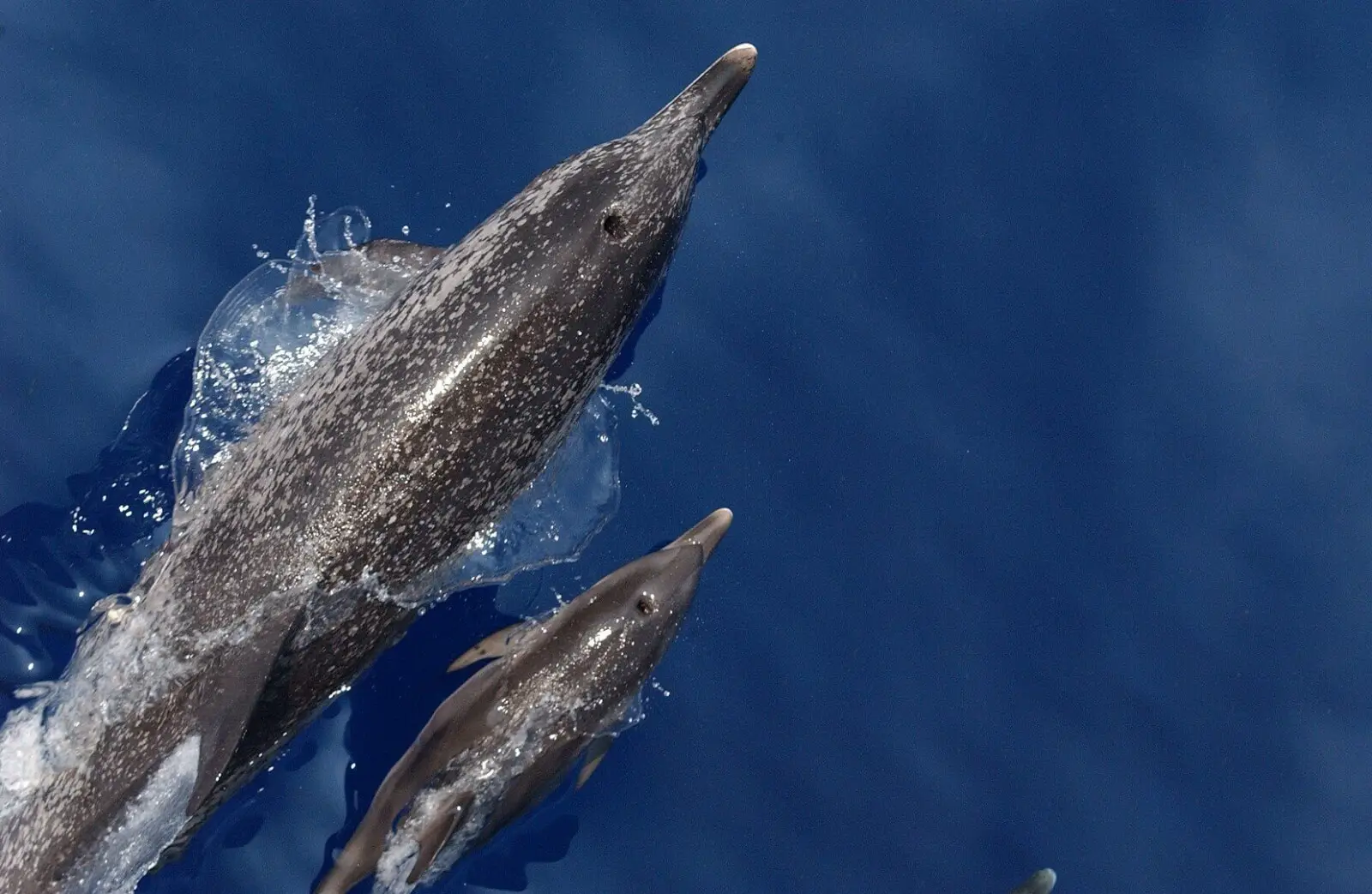
A new study has revealed that water temperature is the key factor determining how common dolphins and Atlantic spotted dolphins share space in the Azores. Using 15 years of dolphin‑sightings data and species distribution models, researchers discovered a clear temperature threshold around 21°C that explains their seasonal patterns: common dolphins dominate cooler waters below this point, while Atlantic spotted dolphins become far more prevalent once temperatures rise above it. The study also found that month‑to‑month shifts in temperature strongly influence how much the two species overlap at sea. These findings highlight how sympatric species—those that live in the same area—use environmental cues to reduce competition, and they provide important insights into how future ocean warming could reshape dolphin distribution in the region.

Read full publication here: Silva, M. I. P., Tobeña, M., Machete, M., Silva, M. A., and Pérez Jorge, S. Water temperature drives the segregation between common and Atlantic spotted dolphins in Azorean waters. Global Ecology and Conservation 62 (2025). https://doi.org/10.1016/j.gecco.2025.e03769

Want to learn more about the project?

NEWS AND PROJECT UPDATES

March 3, 2026|Project Update

NECCTON Highlights Ecosystem Forecasting Developments at European Ocean Days

NECCTON Presented at European Ocean Days: Supporting Ecosystem Forecasting for EU Marine Policy During the Marine Knowledge for Ocean Health session at European Ocean Days, the coordinator of the NECCTON project outlined how Europe is developing the capacity to produce operational marine ecosystem forecasts and why this capability is increasingly relevant for policy and management....

Learn more
February 27, 2026|Project Update

NECCTON Co-Organises Marine Ecosystem Modelling Session at OSM26

At the Ocean Sciences Meeting 2026 in Glasgow (22–27 February 2026), NECCTON co-organised the session “Advancing Marine Ecosystem Modeling for a Predictable and Sustainable Ocean” together with OceanPredict’s Marine Ecosystem Analysis and Prediction Task Team. ...

Learn more
October 20, 2025|News

Mapping 25 Years of Micronekton Dynamics Across Changing Ocean Provinces

This study defines environmentally similar “provinces” to map and track changes in micronekton biomass and vertical structure from 1998 to 2023, shedding light on the seasonal and year‑to‑year variability of these key mid‑sized ocean organisms that drive deep‑sea carbon export and feed many marine predators....

Learn more