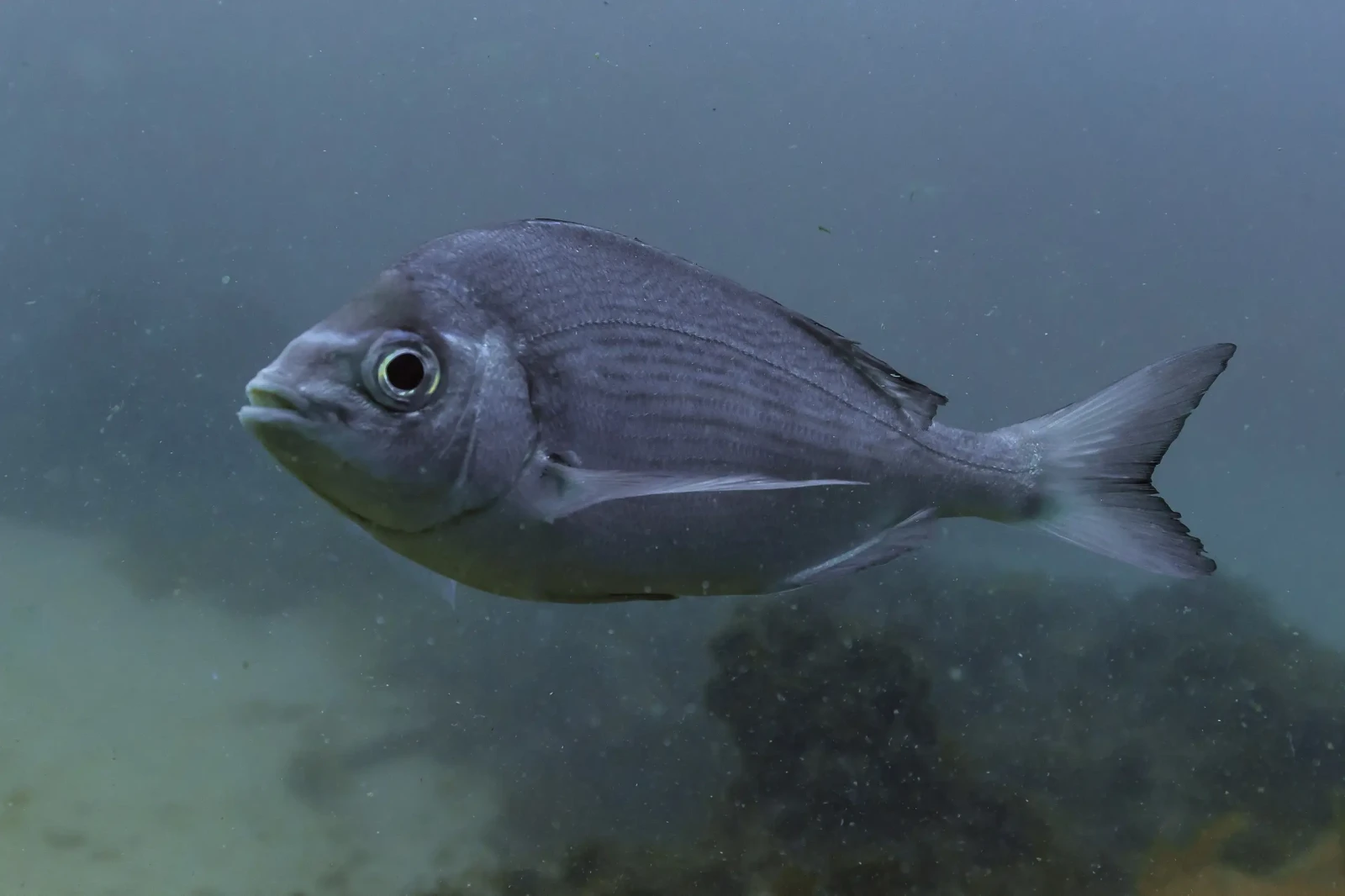
Scientists have mapped out the “hot spots” where blackspot seabream—a commercially valuable but overfished species—tend to gather in the western Mediterranean. The goal is to help fisheries managers better protect key areas that are especially important for the species’ survival.
Using advanced computer models and nearly three decades of scientific trawl surveys, researchers studied where young and adult seabream are most likely to be found in the Alboran Sea and the Strait of Gibraltar. They combined this with information from commercial fishing catches to build a more complete picture of the fish’s preferred habitats.
The study identified several areas where blackspot seabream consistently gather year after year. These stable hot spots are considered ecologically important because they may play a key role in the species’ life cycle and recovery—especially as the stock has been declining.
In the northern Alboran Sea alone, the team found five important areas for smaller seabream and two for larger seabream. Two of these areas—near Cabo de Gata and Almería—overlap with parts of the sea that currently experience relatively low fishing activity. This means they could potentially be protected in the future with minimal economic impact on fishers.
The findings could help guide new fisheries management measures, such as creating Fisheries Restricted Areas (FRAs), to support the recovery of blackspot seabream in the Mediterranean. The study also confirms how useful species distribution models are for understanding where marine species live and how environmental conditions shape their behaviour.
Overall, this research provides a strong scientific basis for improving protection of an overfished species while balancing the needs of local fishing communities.
Read full publication: Panzeri, D., Gil Herrera, J., García Ruíz, C., Rueda, L., Benziane, M., Idrissi Malouli, M., Hernández, P., and Libralato, S. Integration of fisheries and ecological data to support spatial management: the case of blackspot seabream (Pagellus bogaraveo) in the western Mediterranean Sea. Fisheries Research 291 (2025). https://doi.org/10.1016/j.fishres.2025.107549