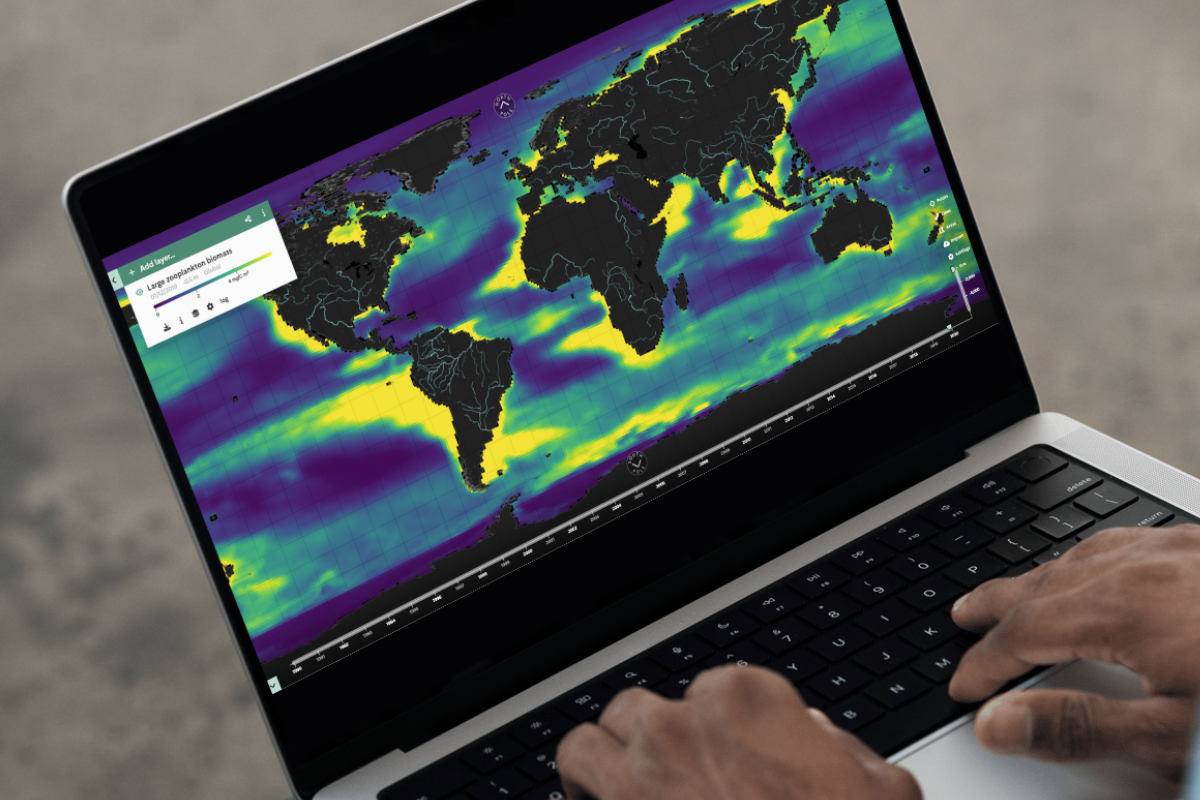
A new video tutorial is now available to help users explore the capabilities of the NECCTON Ocean Viewer, an interactive platform providing access to next-generation marine ecosystem data.
The NECCTON Ocean Viewer brings together advanced ecosystem models, satellite observations and environmental indicators in a single cloud-based platform, enabling users to investigate changes in the marine environment across space and time. Built on the trusted Copernicus MyOcean viewer framework, it provides intuitive tools for mapping, plotting, comparing and downloading marine data.
The new tutorial offers a step-by-step introduction to the platform, showing users how to explore, visualise and download ecosystem datasets through an accessible and interactive interface.
The viewer includes a growing collection of datasets covering:
• Lower trophic levels, such as plankton biomass and underwater light
• Higher trophic levels, including fish and marine mammal distributions
• Benthic communities, such as mussels and seagrass
• Environmental stressors, including microplastics and climate change indices
These products provide a more complete picture of ocean food webs and environmental pressures, supporting research and informed decision-making about the marine environment. Many of these ecosystem variables are not yet available through the Copernicus Marine Service catalogue.
The Ocean Viewer has been designed for a broad range of users, including marine scientists, students, policymakers, conservation organisations, blue economy stakeholders and anyone interested in understanding how marine ecosystems are responding to environmental change.
By integrating ecosystem models with real-world observations, the platform supports investigations into the impacts of climate change, pollution and human activities on marine life. The resulting insights can help improve biodiversity conservation, sustainable fisheries management and evidence-based ocean policy.
Watch the tutorial
🎥 Explore the NECCTON Ocean Viewer and find YouTube tutorial here: https://neccton.eu/ocean-viewer/
For more information about the NECCTON project, visit: https://neccton.eu/